
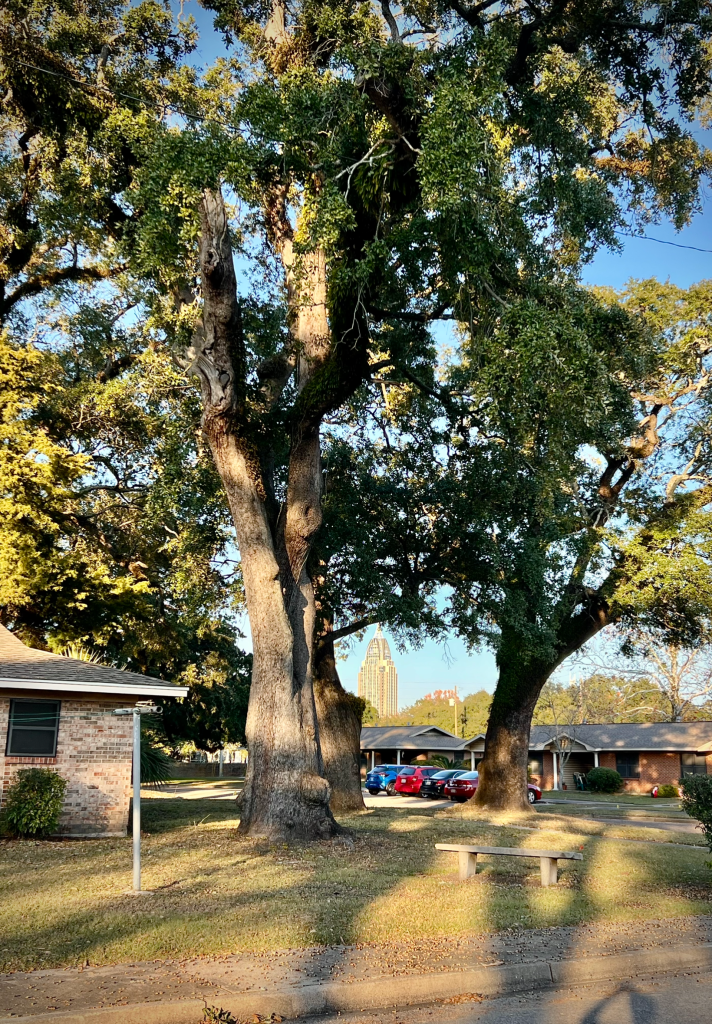

Alfred
For nearly twenty years, Alfred lived in bondage as the enslaved man of William DeForest Holly. Holly’s name appears throughout deeds, newspapers, and court records. Alfred’s does not. Finding him required following scattered references that most researchers would have overlooked.
While researching Holly’s Garden, I discovered the City Court case of William DeForest Holly v. David Foster and William Foster. The lawsuit grew out of an October 23, 1859, collision on the Mobile River involving the schooner Clotilda, then owned by David and William Foster. At the time, the Clotilda was simply a commercial schooner. Within months, Timothy Meaher would purchase the vessel from William Foster. In 1860, with Meaher financing the venture and William Foster serving as captain, that same schooner sailed to West Africa and returned carrying the last known documented group of captive Africans illegally brought into the United States. The Clotilda would later become known as the last known ship to illegally transport captive Africans across the Atlantic to the United States, securing its place in American history.
The court records identify Alfred as the enslaved man of William DeForest Holly and describe the collision that led Holly to sue the Foster brothers. Without that lawsuit, Alfred’s name might never have appeared in the historical record at all. One overlooked court file became the first thread in an investigation that reached far beyond a single accident on the Mobile River.
I didn’t go looking for the Clotilda. I went looking for Holly’s Garden.
I never go looking for famous stories. I go looking for a place. If I’m willing to listen, the land tells me what happened there. One record leads to another. One question creates the next. Before long, the landscape begins revealing a story no one knew was there.
I’ve often wondered about Alfred. The records tell me what happened in the eyes of the law, but they don’t tell me who he was beyond the few words written about him. They don’t tell me what he hoped for, what he feared, or what occupied his thoughts during the nearly twenty years he lived in bondage. They don’t tell me where he rests. As a historian, I can’t write beyond the evidence. But as a person, I’ve always held on to one quiet hope. No trace of Alfred has ever been found beyond those records. I’ve often hoped that somehow he escaped, that somehow his story ended differently than the court believed, and that he found a freedom no document ever recorded. I can’t prove that, and I never will. It is simply the hope I’ve carried with me ever since I first met Alfred in those records.
I may never know what became of Alfred. History may never answer that question. But I do know where he led me.
Holly’s Garden led me to William DeForest Holly. Holly led me to Alfred. Alfred led me to the Foster brothers. The Foster brothers led me to the Clotilda. The Clotilda led me to the illegal slave trade. That trail eventually led me to Emerson Institute and to a community rebuilding itself after emancipation.
What began as the investigation of an 1859 duel became the history of an entire landscape.
That’s when I realized I wasn’t investigating a duel.
I was investigating a place.
And once I understood that, every investigation changed. I stopped asking only who lived there or what happened there. I started asking why it happened there, who else was connected to that place, and what the land had been quietly preserving all along.
The land is always the evidence. If we’re willing to listen, it will tell us what happened there.