The Dark Horse
Why Timothy Samuel “Sam” Strothers Belonged on the Greatest Team in Black Baseball
History always remembers championship teams, but it often forgets the players who made those championships possible. By 1909, Andrew “Rube” Foster had assembled one of the greatest baseball clubs in America. By 1910, he had built what many historians regard as one of the greatest teams in Black professional baseball and, arguably, one of the greatest baseball teams of its era. Every man who made the roster had earned his place.
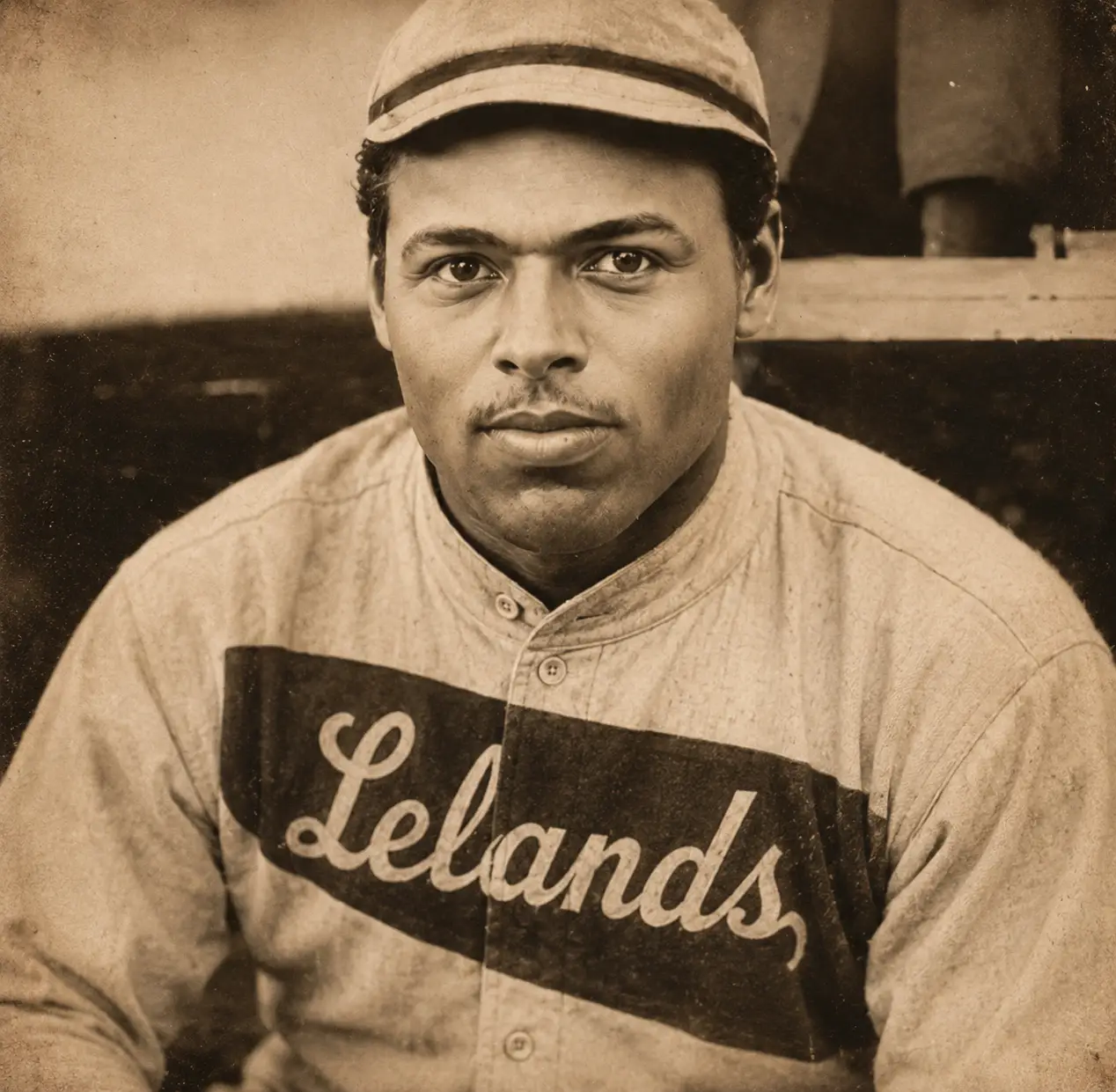
One of those men was Timothy Samuel “Sam” Strothers. Today, his name is rarely mentioned alongside Rube Foster, Bruce Petway, Pete Hill, Frank Leland, or John Henry Lloyd. Yet newspapers, box scores, city directories, team photographs, and surviving records consistently place Strothers right in the middle of one of baseball’s greatest dynasties. The question is not whether Sam Strothers played for the Leland Giants.
The question is why.
Baseball historian Larry Lester made an observation that says more about Sam Strothers than any statistic ever could: “If Sam Strothers was on that team, he had to be a great player.” Lester was referring specifically to the 1910 Leland Giants. That statement deserves careful consideration because Foster did not accidentally build championship clubs. Every player served a purpose, every position was significant to the team, and every roster spot had to be earned.
Andrew “Rube” Foster was more than a successful manager. He was baseball’s architect. He understood Schorling Park better than anyone, designing teams around the ballpark itself. Its huge dimensions rewarded speed, defense, baseball intelligence, and versatility far more than home run power. Foster assembled a club that reflected that, and Timothy Samuel Strothers fit that vision perfectly.
Born in Clay Center, Kansas, in August 1879, Strothers learned baseball under circumstances that demanded resilience. After the death of his mother, Katie Buggs Strothers, he stayed in Kansas while his father sought opportunities in the Pacific Northwest. Playing for one of the Midwest’s earliest integrated town teams in Concordia, Strothers learned to pitch, play shortstop, catch, and move wherever the team needed him. He was never a specialist because his value came from being able to do everything well. That adaptability would become the defining characteristic of his professional career.
By 1906, Strothers had begun playing professionally with the Topeka Giants before making his first trip to Chicago. After joining W. S. Peters’ Chicago Union Giants, he proved himself as one of Black baseball’s dependable professionals. Even a broken leg suffered while catching in Indiana failed to end his career. In July 1908, he joined the Chicago Leland Giants, a decision that would place him on the most important roster of his baseball career.
As Foster prepared for the 1910 season, he quietly assembled something decades ahead of its time. Rather than relying upon a traditional bench, he paired Timothy Samuel Strothers with Fred Hutchinson as dedicated utility players. Strothers worked primarily as a catcher and infielder while Hutchinson filled complementary defensive assignments throughout the club. The phrase super-utility player didn’t exist for decades, but the role already did. Contemporary newspapers, box scores, and Foster’s own descriptions show Strothers catching, playing first base, playing throughout the infield, warming pitchers before games, entering late in close contests, and filling whatever role the Leland’s required. Foster himself described Strothers’ contribution as “significant,” a choice of words that speaks volumes about the trust he placed in him.
If a single moment explains why Foster valued Sam Strothers, it would be the celebrated exhibition series against the National League champion Chicago Cubs. Strothers successfully executed the hidden-ball trick not once but twice, taking advantage of Cubs stars Jimmy Archer and Ed Reulbach. The newspapers reported the play because it was extraordinary. The hidden-ball trick demands perfect timing, full awareness, flawless communication, and total trust among teammates. Strothers did not simply fool two outstanding players; he demonstrated exactly the qualities Foster prized most in his players.
Baseball historian Phil S. Dixon noted reports placing Strothers among the fastest catchers in baseball, and his performances during Chicago’s Normal Park Field Day competitions reinforced the reputation. Occasionally he was used as a leadoff hitter despite being a catcher, a role almost unheard of during the era, his speed explains why. Speed, instincts, baseball intelligence, and dependability defined Sam Strothers, and that explains why Foster continued to trust him in critical situations.
Andrew “Rube” Foster never let the greatness of his 1909 and 1910 teams rely only on Hall of Fame talent. Foster, his vision, and the ability to assemble a complete team, is one of the reasons. Timothy Samuel Strothers was one of the players who completed that vision. Long before baseball recognized the benefits of the super-utility player, Strothers had already proven what the position could do. He caught, played first base, strengthened the infield, warmed pitchers, and stepped into whatever role the team required. He did whatever championship baseball demanded.
History has a habit of celebrating the stars while overlooking the people who made those stars successful. Timothy Samuel “Sam” Strothers was one of those people. He was never the headline, yet he played on one of the greatest teams in Black baseball because Andrew “Rube” Foster believed he belonged there. More than a century later, the historical record suggests Foster was right.